Monday, 12 November 2012

Transylvaaania

Transylvaaania is an historic region of Romania which is famous in popular culture for its beautiful mountains. Interestingly, it is also the home of a large population of vampires.

We began our sojourn at Bran Castle. It was here that the famous Hungarian Count Dracula once lived.

No longer used as a private residence, the castle is now run as a tourist site by the Association for Vampire Rights in Romania.

Brașov is an administrative centre of Transylvaaaaania, and was the first city of over 5,000 inhabitants to elect an undead mayor. One of Mayor de Lioncourts first initiatives was to mandate permanent darkness within the historic centre.

Sighişoara is the cultural heart of Transylvaaaaaaania.

It is the birthplace of Vlad "Ţepeș" Dracul, the very first recorded vampire in history. We spoke to some of the local undead who amazingly still recall sharing a drink with Vlad in the good old days.

Vlad Ţepeș's house is today a restaurant. Unfortunately due to new legislation introduced by the EU, local specialties such as blood sausage, Bloody Marys and blood, have been removed from the menu.

Sighişoara has many beautiful, colourful buildings. The building at the top was where in 1881 the Mureș Peace Treaty was signed between Austro-Hungarian Prime Minister Baron Heinrich Karl von Haymerle and Underworld Leader William the Bloody.

Today, Transylvaaaaaaaaaaaaaaaaaania is actually quite safe. Most Vampires are in prison or living in other government institutions. Many journalists and non-human rights activists have attempted to improve the situation, but meetings with the vampires often end badly.

Taking a break from the tense town life, we went horse riding.


We rode through beautiful forests...

...and pleasant, sleepy hamlets.
Biertan is home to one of Transylvaaaaaaaaaaaaaaaaaaaaaaaaaaania's fortified churches. The local clergy have recently been involved in a scandal after getting behind Team Jacob, which ostrasized local vampires.

Our last town in Transylvaaaaaaaaaaaaaaaaaaaaaaaaaaaaaaaaaaaaaaaaaaaaaaaania was vibrant Sibiu.

The houses here are famous for their eyelid windows which help to reduce sunlight exposure during the long and dangerous summer months.

Sibiu is also home to the only commodities exchange based completely on garlic. Many garlic derivatives are traded daily at surprisingly high prices.

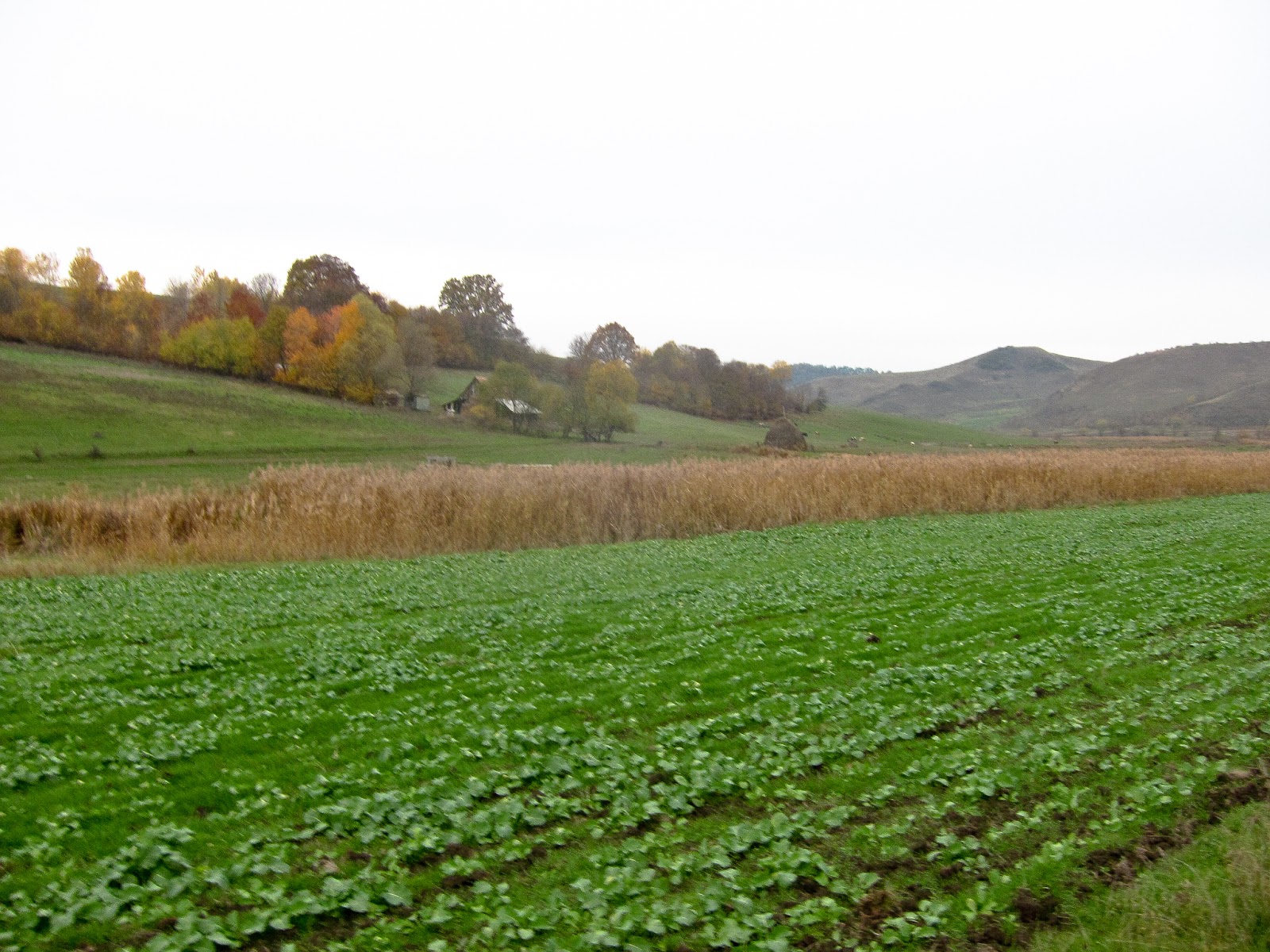
Perhaps what was best about Transylvaaaaaaaaaaaaaaaaaaaaaaaaaaaaaaaaaaaaaaaaaaaaaaaaaaaaaaaaaaaaaaania was driving through the picture perfect farmlands.


 Our final stop in Romania, in the region of Banat, was the green city of Timișoara.

The stunning Piața Unirii.

Also, did we mention that Romania's language, culture and name trace back to the Roman empire. Nearly every town or city has a statue of Romulus and Remus.


Finally, when it was discovered that Josh was an expert on vampires in sport, he was interviewed yet again for national television.

Wednesday, 7 November 2012

Δ

Iași (pronounced Yash) is the capital of the historic region of Moldavia, now part of Romania. It's a pleasant university town with a few interesting sites.

The Trei Ierarhi Monastery

Piaţa Independenţei

From there we headed south until we reached our old pal, the Danube.

We have so far followed the Danube through Germany, Austria, Slovakia and Hungary, and now we witnessed it ending its journey, emptying into the Black Sea. 

Like most wetlands, the Danube Delta is home to more than 320 bird species during the summer months. Unfortunately we were there for the tail end of the annual migration, but we did get to see some straddlers. 

Clockwise from top right: Mute swans, great white egret, Mr frog, fishing nets, ever present pollution.

Cormorants

Spider webs on the banks of the river.

Our next stop was Bucharest. City of sprawling boulevards...

We began with a visit to the Palace of the Parliament. Despite being prepared, from our first glance we were overwhelmed by the staggeringly huge behemoth.

We then found out that that was only a side view!

The brainchild of megalomaniac dictator Nicolae Ceaușescu, it measures 270m by 240m, 86m high, and 92m underground. It has over 1,100 rooms and is the world's heaviest building.

It was built with a budget of over 3 billion euros, at a time when ordinary Romanians were struggling with government austerity, food rationing and energy shortages. In addition, 30,000 homes were destroyed to make space for the construction.

With 40% of the building likely to never be finished and/or used, it is a tragic reminder of the oppressive decades under communism. Rather than see this as a masterpiece of human construction and design, it is simply a symbol of wasted power. It is interesting though to reflect that of course, from the pyramids in Egypt to the cities of great European Empires, all monumental buildings were constructed on the graves of those less fortunate. Perhaps, one day, Romanians will actually be proud of their People's Palace.

In 1989, inspired by events in other Eastern Bloc countries, Romania saw violent protests against the "re-election" of Ceaușescu. On December 21st, many thousands of demonstrators flooded central Bucharest. In University Square, civilians were beaten, shot and run over with tanks as journalists looked on from the Hotel Intercontinental.

Nicolae Ceaușescu and his wife Elena were killed four days later, with transition to democracy and free market following. Today, many Romanians feel that not enough progress has been made, so much so that 41% of them say they would vote for Ceaușescu today.

Some of the problems are clearly evident when walking through Bucharest, such as the 100,000 stray dogs.

Despite its problems, we found the people friendly, the historic buildings pretty and the bars both cheap and fun.

The Romanian Athenaeum

Stavropoleos Church

You may be wondering why we've given so much detail on Bucharest. That is of course because Josh is an expert in this field. He was even interviewed on the subject by a TV reporter from channel Digi24.

P.S. Thanks to Birgit Winder for photos 12, 13 and 18.

Tuesday, 6 November 2012

Moldova (inc. Transnistria)

For a bit of fun, we decided to go to Moldova. Yes, it is a real country.

We left the car behind and took the overnight train from Bucharest (see next entry) to Chișinău.

Taking an international train was a novel experience for us, especially when we had to change gauges.

In order to control rail traffic coming into the USSR, Stalin built railways of a different width to the rest of Europe. So in the middle of the night, our carriage was lifted up and our European chassis replaced with an ex-soviet one. This process, known as "Bogie Exchange" took about 90 minutes.

Previously the Moldovan Soviet Socialist Republic, Moldova has plenty of reminders of its communist past. Such as this mural on the side of our hotel.

Moldova is Europe's poorest country. Its people earn less than those in Bolivia, Mauritania and the Solomon Islands. They even receive aid money from Romania.

A bus ticket cost about 15c and cocktails were about 2 EUR.

 Ştefan cel Mare Central Park

Cathedral of Christ's Nativity

A very nice lady in the National Ethnographic and Nature Mueum insisted on taking several photos of Josh, including a few with this deinothere skeleton.

Moldova is known for its excellent value wine. We enjoyed a glass or two as well as some blintzes.

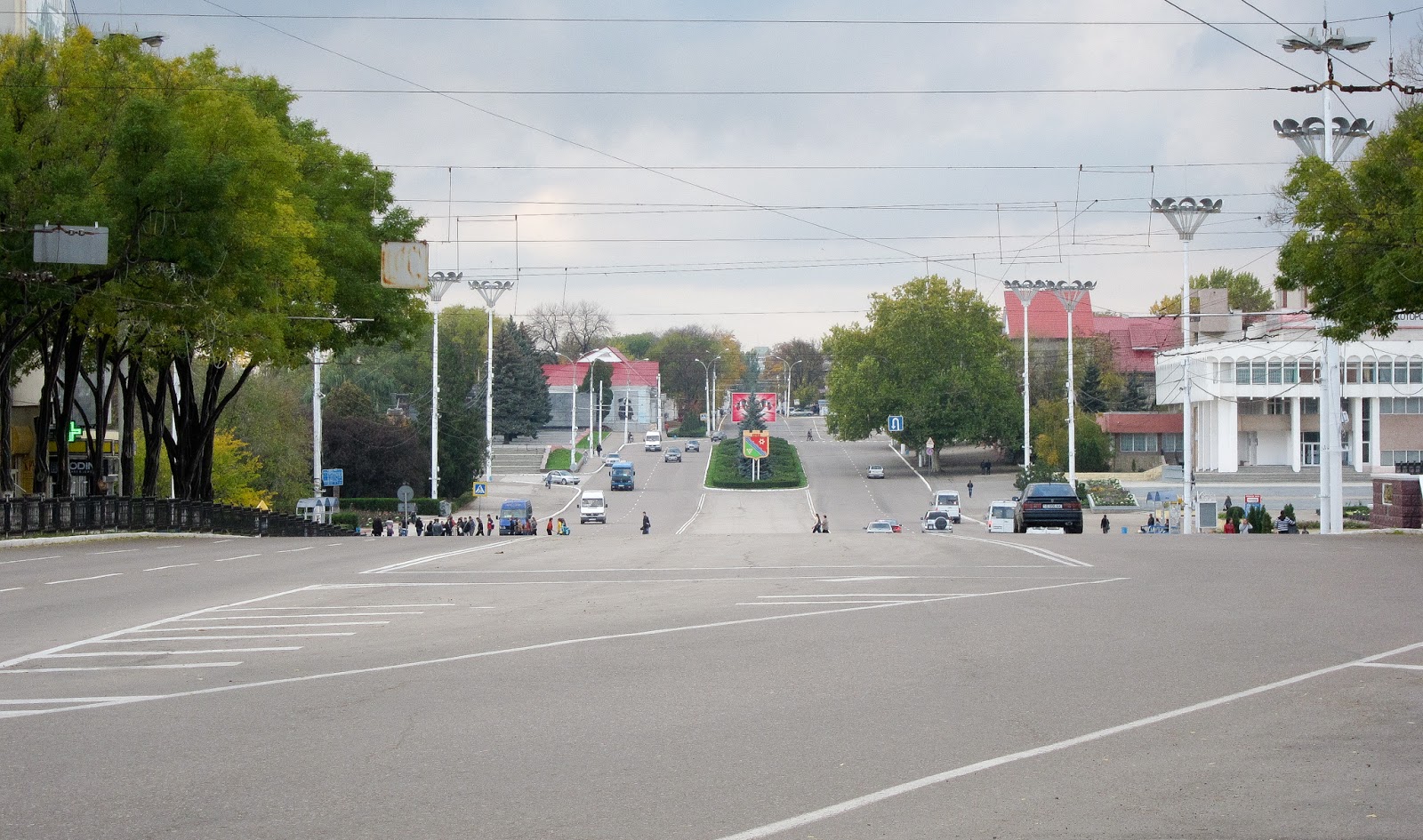
We also managed to visit the breakaway territory of Transnistria. Not recognised by any UN Member State, the pseudo-country has its own parliament, military and currency.


Some of the strange things we saw in Transnistria including an old man walking the street in military uniform covered in medals, erotically dressed female police and a couple in a restaurant that ate cake before soup.

Also, the capital city, Tiraspol, is full of classic Moskvitch cars.

The territory is run by a corrupt government which is heavily influenced by Russia. Many of the buildings and monuments celebrate the region's communist past.


Following Moldova's declaration of independence, in 1992 a military conflict erupted over the territory's independence. The ceasefire has led to the current unresolved status of Transnistria.

The memorial to the victims of the War of Transnistria in Tiraspol.